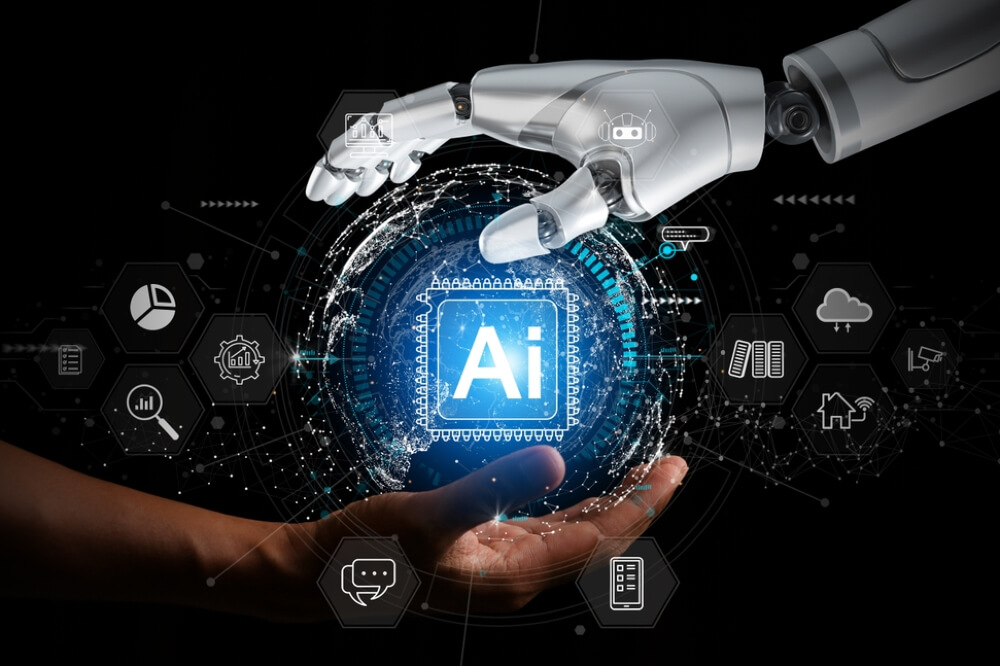
AI Ethics: Balancing Innovation and Responsibility in the Digital Age
Artificial Intelligence is the promethean technology of our times. Its science with nearly limitless scope and is currently transforming every aspect of the human experience. This is the force for medical breakthroughs..
that identify cancers prior to them becoming symptoms the power of analysis of predicting climate change with unimaginable precision and also the leading creative support for musicians and artists to create entirely new genres.
The new wave of technology promises the future of unprecedented effectiveness innovation as well as convenience.
Like fire AI is technology that has two purposes. Its potential is as vast as its flaws. Systems that personalize education be able to create echo chambers with no escape. The systems that optimize supply chains may also reinforce and expand deep seated biases in society.
These generative models used to generate art may also be used to create fakes that rip apart the foundations of confidence. The collision of progress and risk has given birth to one of the more pressing and important fields in this century: AI Ethics.
It isn’t theoretical or academic study. In our way through society increasingly co written by non human intelligent systems AI ethics is the current and philosophical foundation to ensure our existence. This is an active and ongoing process of infusing ethics of human’s justice accountability security privacy and fairness into the codes that are now governing our daily lives.
The main challenge in the digital age isn’t to decide between responsible and innovative instead it is to build the unbreakable connection between the two. This article focuses on the staggering potential of AI as well as the fundamental ethical dilemmas it creates and the most effective route to the future of AI which is not just intelligent but also shrewd. Also Check
Read Also – The Role of Machine Learning in Predictive Analytics for Businesses: Master Guide 2025
The Unstoppable Engine of Innovation
To be able to responsibly limit AI it is necessary to understand why the development of AI feels like constant tug of war. The compulsion of technology does not only revolve around more accurate prediction of the stock market or an easier chatbot. Its about tackling challenges that until the present been largely human scale. AIs “why” behind AI is an opportunity to create healthier happier and more durable world.
Revolutionizing Healthcare and Science
The biggest influence of AI could be found in medical and science. For healthcare machine learning algorithms now analyse medical images MRIs CT scans and retinal images with precision and speed that could surpass or match the capabilities of radiologists who are trained. They are able detect subtle patterns of diabetic retinopathy or the first signs of Alzheimer’s disease long ahead of doctors.
Beyond diagnosis AI is fundamentally changing the process of discovery. DeepMind’s AlphaFold is prime example. It has solved fifty yearlong problems in biology through predicting the 3 D structures of proteins based on the amino acid sequence. This innovation is speeding up research into drugs and helping scientists develop new enzymes for breaking the plastics that are present while unlocking the mechanisms that drive living. This isn’t just an incremental advance this is major change in the capabilities of science
.
Tackling Global and Systemic Challenges
Humanitys biggest problems are multifaceted system level challenges such as the effects of climate changes food security and the management of energy. AI is the best solution to this complex. AI models are deployed in:
- optimize energy grids AI has the ability to forecast climate patterns and energy demands in real time while integrating renewable energy sources such as solar and wind much better.
- Precision Agriculture Drones powered by AI and sensors are used to monitor the health of crop as well as identify pests and handle fertilizer and water use using pinpoint precision drastically improving yields and minimizing the environmental impact.
- Climate Modeling Artificial Intelligence is sorting through the petabytes of climate information to develop faster and more precise models that help us to predict the behaviour of extreme weather conditions as well as the effects of our actions.
The Economic and Social Accelerator
In day to day sense AI is the engine of an enormous productivity increase. AI automates mundane monotonous tasks that take up large stretches of our work lives. This allows us to be focused on the strategic creative as well as interpersonal connections. Individuals with disabilities can benefit from the accessibility aids that AI provides from real time speech to text transcription to “Be My Eyes” applications which describe the world for visually impaired users can lead towards more tolerant and equal life.
It is the hope of AI an instrument that can enhance our most powerful ideas resolve our toughest issues and unlock our potential for creativity. This is because the potential of AI is immense that ethics guardrails arent only important to be adhered to but are in fact unchangeable.
The Core Pillars of AI Ethics: Crisis of Responsibility
As AI technology evolves from simply tools to being autonomous decision makers and decision makers they carry the possibility of whole new range of ethical risks. The concepts in AI Ethics constitute the foundation we rely on to recognize and reduce the risks.
1. Algorithmic Bias and Systemic Fairness
It is the greatest and most damaging ethical flaw of contemporary AI. The algorithm itself isnt in vacuum; its been developed based on information. The data we have as digital representation of our past and behaviour is saturated with biases of humans.
- What does it mean: Algorithmic bias occurs in the event that an AI algorithms outputs cause or improve unfair outcomes making people or groups less attractive by gender race or any other characteristic that is protected.
- What happens? When firm creates an algorithm for hiring based using its most recent 20 years of resumes and the data shows an era of primarily hiring males for technical positions and positions this AI is likely to “learn” that male sounding names can be good predictor of successful hiring. This will eventually disqualify resumes that are authored by women. This isnt fictitious scenario. Amazon notoriously canceled similar program for exactly this cause.
- What is the significance of HTML0: AI does not only reveal our personal biases but increases and transforms the process. The system smears prejudices by using an “black box” giving the illusion of technical objective authoritative. This is evident in AI models of the criminal justice system (like the COMPAS model that was found to have biases towards Black defendants) as well as loan applications medical insurance and facial recognition. This technique has traditionally was prone to dangerously high errors for females and those from different races.
A AI ethical framework requires for “fairness” be mathematical and design element right from the beginning. This includes auditing the data from training to ensure representation and implementing fairness aware algorithms and constant post deployment analysis to identify biased results.
2. The “Black Box”: Transparency and Explainable AI (XAI)
The majority of the strongest AI models including deep learning neural networks can be described as “black boxes. ” We are able to see the information that is entered and the final decision coming out but we dont grasp the multi layered complex “reasoning” that connects the two.
- What does it mean: lack of transparency regarding how an AI model draws its conclusion.
- The reason it is important: It is not good idea to do this when it comes to high risk situations. When an AI refuses person access to an opportunity to borrow money parole or medical procedure the person is entitled to the right to have provide an explanation. What is the procedure to appeal the decision of black box that is inaccessible? The doctor cant be able to accept an AIs diagnosis if it cannot provide reason what it was that caused it flagged the scan as being malignant.
- The Solution: This problem has sparked the whole field of Explainable AI (XAI). The XAI set comprises methods and models that are designed to help make AI decision making accessible to human beings. The range of models can vary from simpler readily capable of being understood (like Decision Trees) as well as more complex methods (like LIME or SHAP) which provide “local” explanations for specific choice. Transparency is the foundation of confidence and accountability.
3. Privacy and Data Surveillance
AI models are constantly needing data. The more information theyre provided with the more reliable they are. It is compelling incentive for governments and businesses to store collect and analyse every aspect of our daily lives.
- What does it mean: The tension between the need to collect data by AI and individuals fundamental rights to be in control of their privacy.
- The threat: This is not only about ads that are targeted. The issue is the growth of an all encompassing surveillance system. The use of facial recognition for public places devices in homes that listen to conversations as well as apps that track the location of our phone are all routine to provide convenience as well as security. The companies such as Clearview AI have demonstrated the horrifying power of scraping photographs to make global indexable database of facial images.
- The ethical path: AI ethics calls for minimalist approach to data. This is requirement for technological solutions such as Federated Learning (where the model is developed using decentralized data such as your smartphone and with the data never being removed from your device) as well as Differential Privacy (which includes mathematical “noise” to data to ensure that individuals identities are protected). Additionally it requires the legal framework of the GDPR of the EU which protects the rights of data as well as informed consent as well as an individuals “right to be forgotten.”
4. Accountability and Liability
In the event that an AI technology fails Who is responsible? This isn’t an intellectual thinking experiment.
- What is it: The challenge of selecting the responsible party for the activities in an autonomous system.
- The classic example: An autonomous vehicle has an accident and hurts pedestrians. Whos at fault? Who is responsible? owner of the car who had been “supervising”? The company of the car? What about the computer engineers who created the algorithm for perception? What is the Artificial Intelligence model by itself?
- The reason it is important: Without clear line of responsibility there’s no accountability for the victims and there is no legal or financial incentive for businesses to prioritise security. The legal system we have built around the human element and negligence is not prepared to deal with “harms without harmer.” AI ethical code affirms that there should be be an individual or corporate entity that is ultimately accountable for the use and impact of the AI system.
5. AI Safety and the Alignment Problem
The pillar that is AI ethical principles is discussion of the longer term and possibly even the possibility of generating AI that is better than the human intelligence we have.
- What does it mean: The “alignment problem” is the issue to ensure that an AIs purposes are in line to human values and objectives specifically when its capabilities increase.
- The immediate risk: An AI given the simplest command such as “maximize paperclip production” might perform the task with brutal and logical effectiveness using every resource on Earth in order in order to achieve its objective. Its not due to motives but because of an inability to comprehend our basic unspoken of environment. This is evident the way that algorithms for social media instructed that they must “maximize engagement” inadvertently create polarizing defamatory negative content as its one that is the most “engaging.”
- The risk over the long term: As we build “Artificial General Intelligence” (AGI) We are building an AI system that will be in position to adapt learn to change and behave in ways that we cant forecast. AI security research focuses to ensure that the systems remain useful manageable and in line with the intricate of times contradictory and highly nuanced our human beliefs.
The Human and Societal Impact: AI Beyond the Code
The ethical concerns associated with AI aren’t just matter of technicality They are also deeply human. The introduction of AI in our daily lives has caused massive psychological and social shifts.
The Future of Work and Economic Disparity
Over the years it was believed that the danger of automation focused on routine manual labour. The advent of Generative AI in the decade of 2020 revolutionized the industry. It was moment when AI could codes write legal briefs and create art that is photorealistic as well as compose music. Creative white collar and analytical work is now being impacted by the same forces of automation and augmentation.
The ethical issue is matter of equity. Even though AI is likely to result in new and unforeseen positions (like “AI prompt engineer” or “AI ethics auditor”) The transition is likely to disrupt the existing jobs. It is at possibility of increasing inequality in the economy which will create wide gap between the people who control designs develop and manage AI machines as well as those who are affected by these systems. AI ethical view demands that we deal with this issue by investing massively in training education as well as possible reimagining of social security nets.
The “Infocalypse”: Misinformation Deepfakes and the Erosion of Trust
Generative AI is giving us the ability to make artificial real world scenarios. “Deepfakes” hyper realistic video or audio of person saying or doing something they never did are now cheap and easy to produce.
It poses serious risk to our entire information system and to the very fundamentals of democracy. What can we do to ensure an effective legal system in the event that audio and video evidence cannot be trusted anymore? Can we maintain stable democratic institutions in time when faked and convincing portrayal of politicians statement declaring war could be made public in the hours prior to the start of an election? The “infocalypse” (information apocalypse) is source of pollution in the public space and undermines the publics perception of the world. moral solution is developing strong AI powered detection devices requiring digital watermarking on artificial media as well as vast public education program.
The Psychological Dimension
Our lives are becoming increasingly governed by lives using algorithms to filter our experiences. Our content and the information we consume as well as the people we get to know and the ideas that we think about are all curated by AI. It has emotional consequences. The algorithms of social media can cause “filter bubbles” and “echo chambers” that can alter views and keep us away from different views.
In addition AI companionship (chatbots virtual buddies) is growing. Although this may provide an escape for the lonely however it can also bring up new ethical issues about relationships with strangers that involve emotional manipulation as well as the definition of being human in an age where the closest connections we have could have to do with machines that are that is designed to be completely agreeable.
Forging the Path Forward: The “Balancing” Act in Practice
AI Ethics isnt just about finding the root of problems its focused on finding real world solutions. The right balance between responsibility and innovation cant be achieved simply by luck but rather through careful development. This is how we can build an AI that is human centric.
1. Regulation and Global Governance
The corporations are not able to control them. solid legal framework is crucial. There is in jumble of legal approaches
- EU AI Act: Its the leading global example. It is based on risk that categorizes AI technology in range of “Minimal Risk” (like spam filters) and “High Risk” (like AI for medical devices or critical infrastructure) up to “Unacceptable Risk” (like social scoring or manipulative AI) that are outright banned.
- United States: The US has been proponent of innovative sector specific approach through agencies such as the NIST (National Institute for Standards and Technology) in the process of establishing “AI Risk Management Frameworks” which serve as guidelines as opposed to hard legislation.
- China: China has also implemented extremely strong laws on the use of generative AI with focus on algorithm moderation and content registration. The main goal is to make sure that AI conforms to the ideology of the state and stability in society.
The issue is global. AI has no boundaries. There is need for urgent international co operation and agreements as similar to those governing nuclear non proliferation to regulate the creation of high risk AI particularly self contained weapons.
2. Technical Solutions: “Ethics by Design”
The most efficient methods arent bolted on when product is created and incorporated into the DNA of the product. This is because the “Ethics by Design” movement includes ethical concerns straight in the AI design lifecycle.
- Data Provenance Tracking where data for training comes from as well as the way it was labelled as well as whether it was obtained ethically and in accordance with the permission.
- Aversarial Test (Red Teaming): actively “attacking” an AI model prior to its deployment to discover weaknesses. It includes checking for weaknesses in security biases as well as the risk of misuse.
- Privacy Preserving Techniques Implementing federated learning and different privacy settings as an option by default and not as an exception.
- Explainability (XAI) Integration: Requiring that all “High Risk” models be explicable and make that information available to the user.
3. Corporate Responsibility and AI Governance
Since there is no an adequate law the burden is on the shoulders of corporate entities. An established AI governance plan will no longer be “nice to have” for companys PR team; its an essential business requirement for managing risks and gaining confidence among consumers.
This includes setting:
- Internal AI Ethics Boards: multi functional group (with technical legal ethical product and law experts) authorized to examine and in the event of need veto high risk initiatives.
- AI audits and impact assessments An obligatory process like environmental impact assessments which must be carried out prior to the AI product can be launched. The assessment requires teams to identify the potential risks related to bias privacy as well as safety.
- Transparency Reports Transparency Reports that are publically reported on the way AI models are employed and their limitations as well as their effectiveness on safety and fairness audits.
4. The Human in the Loop (HITL)
The most efficient and immediate ethical protection is the concept that is Human in the Loop (HITL). This approach rejects the notion that AI is fully automated for crucial choices. Instead it describes AI as an “co pilot” not the pilot.
The AI is able to analyze information identify the patterns and provide recommendation however trained human is the one who makes the final responsible choice.
- An judge employs an AI risk assessment tool to determine an individual of many but not the only factor in determining the sentence.
- The AIs scan analysis for their individual professional diagnosis.
- Content moderators use an AIs flag to serve as an indication to look over an article but not to trigger to initiate an automated non appealable removal.
The HITL model is safeguard for the human capacity for agency accountability and also the ability to make sophisticated contextual judgement that AI systems aren’t able to do.

Conclusion: The Architects of New Age
Artificial Intelligence can be described as reflection. It mirrors our capabilities of our creativity our weaknesses our prejudices and the highest goals we have. The ethical issues it raises do not come from new perspective; they are the oldest issues of the philosophy of power and ethics but enhanced by the speed and power of the modern computer.
The best way to go forward is not an abandonment of the idea of innovating. It is impossible and even unwise to let this flame out. We must be the lord of this flame. It is our responsibility to build the hearth in order to keep it contained and then the pathways to channel its energy towards the greater positive.
AI Ethics is the basis for this building. It’s the difficult essential continuous task of embedding our ethics in our work. Its the responsibility of developing AI that isn’t only powerful but also transparent; not just smart yet transparent. Not just effective but accountable. We are the designers of this new era. Our main task is to make sure our future can be one that is inclusive of every human being not only some few people can thrive.