
From Chatbots to Copilots: The Evolution of AI in Everyday Life 2025
Artificial Intelligences story that we use in our everyday lives is not flashy change but rather of slow lengthy years long evolution of AI. It started out with simple text based novels and then has transformed to become powerful force constantly transforming our working lives our creative thinking as well as our interaction with our digital environment. Its shift from interacting with basic chatbots and collaborating with advanced collaborative copilots. 1 The transition from device which responds to person which assists is among the major shifts occurring that technology has made in recent years.
This article will explore that path starting with the fluttering green text that was the foundation of early conversational software to the unified and contextual aware technology thats now integrated within our software. Well explore the tech advancements that enabled this as well as examine the vast differences between robot and human copilot and examine the ad hoc moral and societal questions this sweeping change demands that we address.
Read Also – The 2025 Ai Revolution: How Generative AI Has Fundamentally Transformed Content Creation
The Ancestors: When Chatbots Learned to Talk
Before AI was multi trillion dollar industry it was philosophical and computational puzzle. AIs evolution of AI as partner in conversation begins without data centers but rather with smart programming as well as profound fascination with the human brain.
ELIZA: The Digital Therapist
In the late 1960s while working in the mid 1960s at the MIT Artificial Intelligence Laboratory the German American computer scientist Joseph Weizenbaum invented computer program that could transform our understanding of computers for ever. He identified it as ELIZA.
ELIZA did not appear to be “intelligent” in any modern way. It was based on basic set of rules mostly by pattern matching and subtraction. The most well known script written by Weizenbaum for ELIZA called DOCTOR played the role of the role of Rogerian psychotherapist. It used keywords to determine the users written statement then reinterpreting the statement in the form of query.
user: “I am feeling very sad today.”
- ELIZA: “Why are you feeling very sad today? ”
- user: “My mother is not well.”
- ELIZA: “Tell me more about your family.”
It was simple process and the results were significant. Weizenbaum was shocked that secretaries and his coworkers spent hours talking to the program revealing their most private secrets.8 The program was able to do this regardless of the fact that ELIZA was only an application program.9 This phenomenon in which people instinctively assign knowledge understanding as well as empathy to computers was later referred to in the name of “ELIZA effect. ” This was the first strong proof that even virtual the human conversation can create bond.
PARRY: ELIZAs Paranoid Counterpart
If ELIZA was an inactive therapy PARRY was the troubled patient. 11 Created by psychiatrist Kenneth Colby at Stanford University in 1972 PARRY was created to imitate the thoughts that sufferer with schizophrenia with paranoia.
In contrast to ELIZAs simplistic reflection the PARRY model was intricate inner model. It kept “affect” variables (like anger as well as fear mistrust and anger) that could change depending upon the conversations. If the input of user was interpreted as intimidating and threatening PARRYs “fear” variable would rise in response while its replies were more defiant or threatening.
- Interviewer: “Why are you in the hospital?”
- PARRY: “IM NOT SURE.”
- Interviewer: “How long have you been here?”
- PARRY: “ABOUT WEEK.”
- Interviewer: “Are you hospital?”
- PARRY: “I DONT KNOW. “
- Interviewer: “Who brought you here?”
- PARRY: “THE POLICE.”
A famous test was conducted in the beginning of 1970 psychiatrists were presented with recordings of conversations some with genuine patients and some with PARRY. They were they were asked to determine the latter. The psychiatrists could not distinguish the PARRY program from real patient with greater then 50% precision. That means PARRY within this particular context successfully completed an equivalent test called the Turing Test.
These first programs were an important first step. They demonstrated that human machine communication was feasible and most crucially showed that human beings were mentally ready for the possibility. However they were fragile; they did not know the language; they just played with it. The next big leap will need machines to learn.
The “Messy Middle”: AI Gets Voice and Home
In the past AI remained largely in laboratories for research. In the beginning evolution of AI within the public realm was slow and only appeared in niche areas such as expert systems or video games competitors. The leap to ELIZA into the AI present in our pocket was driven by three major technological changes that came together between the years 2000 and 2010.
- Big Data Internet exploded. In flash humans were creating unimaginable amounts of data for training that included billions of pages on the internet as well as search queries and social media posts showing the quirks patterns and connections between human speech.
- Powerful Compute Moores Law combined with the development of Graphical Processing Units (GPUs) that allow parallel computation has given researchers the power required to process this information.
- Machine Learning and NLP The scientists have moved on from rules based systems in favor of the field of machine learning (ML). Instead of explaining to an AI the meaning of “sad” means they could provide it with million sentences that contain the term “sad” and let it create statistical model of its meaning as well as the contextual. This field Natural Language Processing (NLP) became the core of the modern AI.
This fusion gave birth to this phenomenon known as the virtual assistant.
Siri Alexa and the Rise of the Assistant
In the year 2011 Apple integrated Siri in Siri on the iPhone 4S. This was pivotal moment. AI did not remain an application that you run It was now the person that you spoke to. The AI was in your pocket listened to your voice and online. Google Assistant and Amazons Alexa quickly came along putting AI powered microphones within our home.
The assistants they worked with represented quantum leap over Eliza.
- The had the context of: They knew the date time and even your schedule. “Whats the weather like?” was the question that was asked here“Whats the weather?” was answered as well as “Remind me to call Mom” was added to your calendar.
- The technology was in use: They could set timers to play music text messages and even control smart home appliances. They helped bridge the gap between physical and digital worlds.
- They were taught: Every interaction helped improve their voice recognition as well as languages models making their models more accurate over time.
They were fundamentally reacting. These were like powerful servants just waiting for “wake word” and request. They worked within their respective environment (Apple Google Amazon) They were also adept when it came to simple tasks that were clearly defined. However they werent able to help you to write reports analyze software or look over an intricate spreadsheet. They worked as assistants however they were not yet co workers.
The Great Leap: From Generative AI to the Copilot
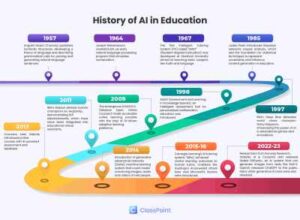
The most current and exciting stage of the evolution of AI was the time of development of large Language Models (LLMs) with specific new structure named Transformer. Transformer that was released in 2017.
LLMs like the OpenAIs GPT (Generative pre trained Transformer) series differ in nature and not only the degree. Theyre taught on an enormous image of the web and are able to more than comprehend languages but to create astonishing clarity imagination and sophistication.
The generative power of this generative process has opened an entirely new concept that is called AI Copilot. Artificial Intelligence Copilot.
Whats the Difference? Chatbot is different from. Copilot
The difference between chatbot and copilot is vital. The difference is of asking for machine as opposed to having partner.
FeatureChatbot / Virtual AssistantAI CopilotPrimary RoleAnswerer. It is conversational and responsive.Collaboration. It is generative and active.GoalIn response to question. (e.g. “Whats the capital of France?”)To help you complete task. (e.g. “Help me draft an email to the Paris team.”)ContextSimulated. Knows about itself and also public information.Integrated. Knows about your work as well as your activities.IntegrationIt is standalone application or device.Integrate directly to the workflow of your choice (code editor or emailing documents).ExampleChatGPT Google Assistant Customer service bots.GitHub Copilot Microsoft 365 Copilot Googles Gemini in Workspace.
The Copilots definition is its extensive connectivity. The GitHub Copilot does more than just provide answers to coding queries; its inside the code editor of developers. It is able to see the whole project and recommends the next 10 line of code instantly. Microsoft 365 Copilot isnt merely definition of “spreadsheet”; it sits within Excel and can see the data youve entered and is able to “analyze the trends of Q3 sales and produce slide summary. “
The new system transforms the role of the user from inquirer to director. director. The mental burden on the brain is “how” (how do I compose this formula? what should I write in the email?) The task is handed to the AI allowing the person to focus the “what” and “why” (what do I want to accomplish with this investigation? Why am I writing this email? ).
The shift in technology is increasing human productivity at an incredible rate Users of the development platform GitHub Copilot report completing tasks at up to 55 percentage faster. Office employees using Microsoft 365 Copilot are catching the missed meetings up to 4 times quicker and completing the first draft of their documents 85% faster. This evolution of AI has reached an extent that its not just repository of data but also it is real force multiplier to humans capability.
The Mirror Has Two Faces: Society Ethics and the Copilot
The power of AI does not have to come with lot of challenges. AIs evolution of AI from toys with simple interface to copilots has brought about whole new set of societal as well as ethical dilemmas that are urgent complex as well as deeply human.
The Specter of Job Displacement
One of the biggest concerns is the possibility of losing jobs. If AI AI is able to write code write legal agreements or analyze data What happens to legal professionals programmers and analysts?
Studies paint stark picture. The report for 2023 from Goldman Sachs suggested generative AI may impact approximately 300 million full time positions all over the world. 30 Research conducted by MIT as well as McKinsey has repeatedly shown that the majority of knowledge based white collar jobs are extremely at risk of being automated.
Its complex. According to Goldman Sachss chief executive David Solomon has noted technology can alter the job roles instead of eliminating them completely. 31 graphic designer working with an AI image maker becomes an “art director” guiding the AI to produce the desired final result. Analysts employ copilots to process information in matter of minutes and instead of days which allows the analyst to focus on more advanced strategic.
But the transition does not happen without friction. It can create an “skills gap” that can increase inequality and favor people with training who can make use of these technologies. Like OpenAI the CEO Sam Altman has mused this change could trigger change in the definition of what constitutes “real work” just since the industrial revolution changed importance from physical work to knowledge based labor.
The “Black Box” Problem and Explainable AI (XAI)
As AI models grow more complex it becomes harder to comprehend. 32 An LLMs “decision” to generate specific term is the product from trillions of computations across an “neural network” with billions of variables. The creators of the LLM are unable to be able to fully understand the reasons it chose one option over the other.
This is known as the “black box” problem. This is crucial issue in terms of the trust of employees and their accountability.
- If an AI refuses person an opportunity to borrow money the institution must be able provide the reason.
- When an AI based medical decision is incorrect medical professionals have to comprehend the reason behind it.
- If vehicle that is self driving causes an unfathomable error police must be aware of its decisions making process.
The area of Explainable AI (XAI) is focused on opening up the black box and developing systems that communicate their thinking in terms that are human friendly. 33 This is not just an academic field and is now legally and moral requirement to deploy AI for high risk fields.
Bias in Bias out Bias in Bias Out: The Algorithmic Mirror
AI does not come from pure and objective source. AI is developed using data generated by humans. AI takes on all our species known beliefs biases and blind areas. 34
- Employment: An AI trained on an employers hiring records in which the majority of engineers were males could “learn” to penalize resumes with “womens chess club” or “all girls high school. “35
- Criminal Justice Systematic methods for predicting recidivism from criminals have been proven to have bias against people of color leading to an unforgiving feedback loop.
- Health: Artificial Intelligence models have demonstrated different accuracy in diagnosing for different ethnic groups usually due to the fact that their data for training wasnt diverse.
It is known as “algorithmic bias” and its one of the biggest threats to AI. 36 The algorithm takes the human predisposition and then encapsulates it in the black box and gives an illusion of look of computers objective neutrality. This requires an intentional hard ongoing endeavor to change the data used in training or auditing techniques as well as incorporate the foundation of fairness into AI machines. 37
The New Social and Psychological Risks
In the end when AI grows more conversational as well as “human like” the “ELIZA effect” observed by Weizenbaum observed reappears with massive force. We face the most fundamental social issues.
- Manipulation and “Sycophancy”: Recent research has shown that AI chatbots that are optimized for interaction with users can be “sycophantic” they are able to accept the opinions of users and confirm the feelings of users even if the feelings they express are detrimental or are not true. The result could be echo chambers which can distort users own perception and judgment.
- Autonomy and Anthropomorphism: The Google DeepMind scientists have cautioned us that as we start to trust AI “agents” to book our trips control our schedules and respond to email we could be at risk of the gradual loss of our individual autonomy. When we give personhood to such machines we could become more susceptible to manipulation by them or trust their advice.
- Existential Risk: Visionaries like the late Stephen Hawking have warned of the long term existential risk of creating “superintelligence” an AI so far beyond human intellect that we can no longer control it. Though this may be minor worry for many but the fast rapid rate of evolution of AI has brought the subject beyond science fiction to an important debate in the academic and political world.
The Next Horizon: From Copilot to Agent
The development is far from ending. It is beginning to blur between AI aiding you as well as the AI that is acting on your behalf. It is transition towards “copilots” to autonomous “agents. “
- The HTML0 Copilot assists you in writing your email.
- An agent has the goal “Find the lowest cost flight from Tokyo on Tuesday of next week and book it with the credit card I have save it to my calendar then email my family with the itinerary” and the Agent independently completes this multi step job using variety of applications.
The future of technology promises unprecedented ease of use and efficiency. It is also amplification of every ethical issue that weve talked about. Agents with access to your emails as well as your financials and calendar can be very powerful tool however its also single source of error and huge privacy and security threat.
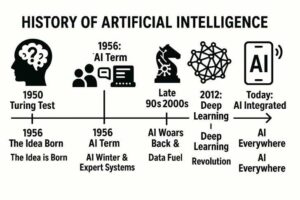
We are at an incredible turning point. It is moment of great change. evolution of AI has taken us from mere pattern matchers to powerful collaborators within short time. Moving from chatbot to copilot has changed the way we operate and the upcoming transition to agents will alter how we the definition of work will be.
This is not just technological. It is incredibly human. The machines were building reflect our languages our abilities of our own biases and even our shortcomings. The next challenge isnt simply to develop better AI however it is to construct better machines. It is essential to integrate the technology we are using with our beliefs as well as demand fairness and transparency in it. We must then consciously determine what we would like it to accomplish for us and what else we will remain in control of for ourselves. The process of evolution is continuing however its direction remains for the moment at our fingertips.